
The 7 Rangi (or “seven-color”) Formula, also known as Satrangi Formula is a structured, seven-step proposal strategy designed to help freelancers bid more effectively on platforms like Upwork, Freelancer, and Guru.
It is a method crafted by Hisham Sarwar, a prominent Pakistani freelancer and influencer and it is rooted in understanding client needs and showcasing value through each part of your pitch so that you can actually win more projects to make more money online.
While many freelancers in Pakistan struggle because their proposals lack personalization or focus and any professional feeling.
The 7 Rangi Formula remedies this by making every proposal detail-oriented, showing clients you’re attuned to their specific needs while ensuring the quality by focusing on what is neccassry than making clues in your proposls.
Hisham Sarwar did a marvelous job by describing his fomrula, but I have seen many complaining about it and asking for more precise explainations.
So I am here today to help you better understand this thing. Let’s read this complete guide on 7 Rangi Formula:
Step-by-Step Breakdown of the 7 Rangi Formula
There are 7 basic steps that you need to read and understand deeply (you can’t skip any of these seven steps for crafting a winning proposal):
1. Greeting
Begin crafting freelancing job proposal with a respectful greeting and, if possible, use the client’s name.
Yes, a personalized start to your proposal shows professionalism and attentiveness to your potential client.
Instead of generic intros, addressing the client directly can make a great first impression.
Here’s an example of a personalized greeting for a freelance job proposal:
Generic Greeting:
Dear Client,
Personalized Greeting:
Hi [Client’s Name],
I hope this email finds you well. I’m writing to express my interest in your [Project Name] project.
You can copy above example and edit to make it yours.
Here’s a great example of a winning bid:
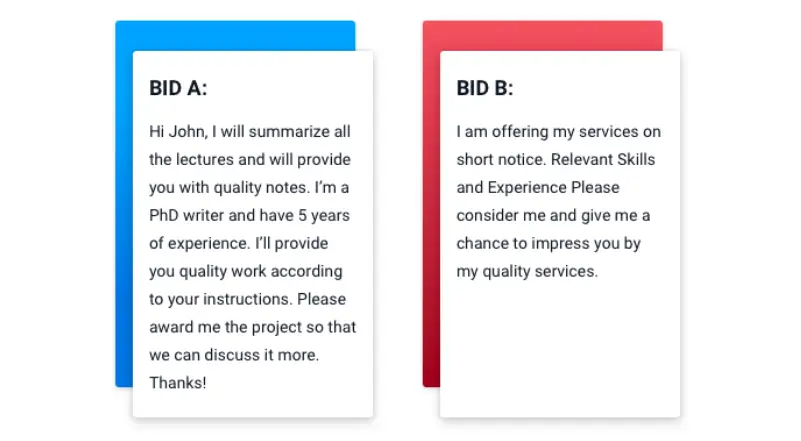
Source: Freelancer.com
2. Restate the Project Requirements
In your own words, summarize the project’s main requirements as stated in the job post (yes, you need to read and understand the job description for this).
This step is crucial; it shows the client you fully understand their needs and are attentive to detail.
Here’s an example of restating project requirements:
Original Job Post:
We’re looking for a skilled content writer to create engaging blog posts on a variety of topics related to digital marketing. The ideal candidate will have a strong understanding of SEO and be able to write clear, concise, and informative content.
Restated Requirements:
From my understanding, you’re seeking a content writer to produce high-quality blog posts centered around digital marketing. These posts should be optimized for search engines, easy to read, and provide valuable insights to your target audience.
By restating, you’re indirectly telling them, “I get what you’re asking for,” which instills confidence.
3. Introduce Yourself (Briefly)
You should share a concise introduction about your existing experience, focusing on what directly relates to the job in question.
Aim for a blend of professional credibility and a personal touch to the project.
Avoid generalizing about your skills; instead, highlight a specific, relevant achievement to make an impact (or a dent in your client’s brain for making him give project to you).
4. Explain Your Value
Now this is your chance to emphasize how your unique and relevant expertise aligns with the project’s demands.
The key here is to articulate why you are the ideal candidate for the said job.
Use terms directly from the project description when possible, reinforcing your fit.
Hisham Sarwar advises freelancers to focus on “solutions” rather than “skills,” demonstrating how your input will address the client’s needs directly.
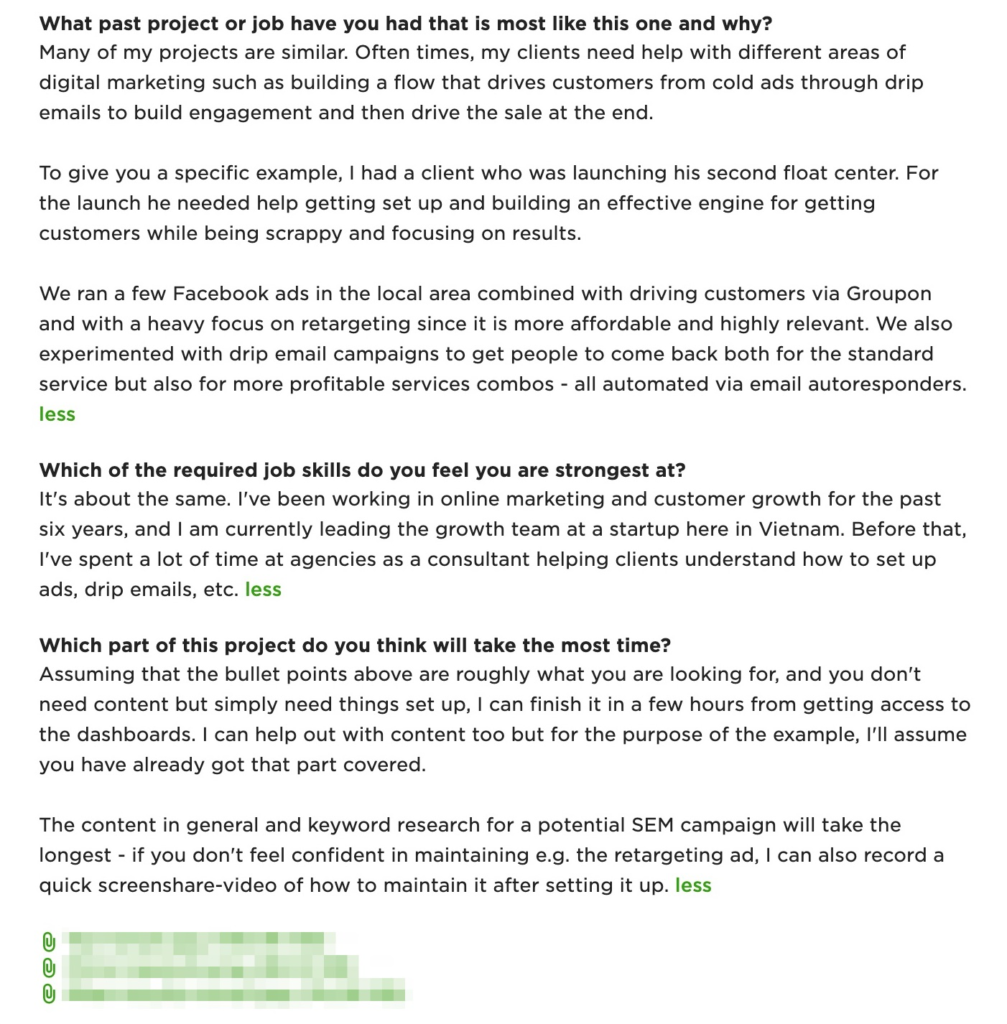
5. Portfolio/Work Samples
Clients love to see tangible proof of your capabilities (yes, certificates are not enough).
Attach or link to relevant projects that closely mirror the client’s needs.
Quality over quantity is important here—provide a few standout samples rather than an overwhelming portfolio.
Ensure each sample has relevance to the job, proving that you’ve done similar work before and could do better this time.
Here’s a great example from Millo.co:
6. Offer a Free Mockup or Ask a Clarifying Question
This step sets you apart by showing genuine interest for the freelance job.
Offering a mockup or a short preliminary version demonstrates your willingness to go the extra mile for same price tag.
If a mockup doesn’t fit, pose a meaningful question about the project’s specifics.
This strategy shows that you’re thoughtful and invested in the project, encouraging client interaction.
7. Close Strongly
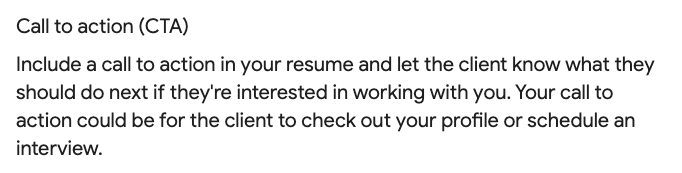
Wrap up with enthusiasm and a call to action (CTA).
Express how eager you are to work on the project, reinforcing your interest and expertise.
Make the client feel they’re choosing not just a freelancer, but a dedicated partner for (maybe) longrun.
Hisham Sarwar with his years of experience in freelancing world emphasizes that clients appreciate proactive closers who leave a lasting, positive impression on them.
Here’s what Upwork officially suggests:
Why the 7 Rangi Formula Works
The beauty of this formula lies in its balance of structure and personalization.
Many proposals come across as robotic or poorly targeted, but the 7 Rangi Formula forces you to dive into each part of the process, maximizing connection points with the client.
Hisham’s formula leverages human psychology by subtly showing the client that their project is your top priority.
Moreover, it creates a rhythm—each “color” in the 7 Rangi process contributes to a broader story about your professionalism and value, ensuring clients have a full view of what it would be like to work with you.
All while there are no colors in the formula at all. (it doesn’t matter, right?)
Tips for Using the 7 Rangi Formula Effectively
Here’s a list of some tips (from my end) to help you utilize this so-called project winning formula effectively:
- Tailor Every Proposal – Avoid copy-pasting the same proposal for each job. Customize every proposal to suit the project’s specific needs, as generic pitches are less likely to win.
- Mind Your Language – Use a friendly, yet professional tone. Clients appreciate freelancers who feel approachable.
- Avoid Overselling – Let your work samples and achievements speak for themselves. Being overly promotional can sometimes deter clients.
- Consistency is Key – Practice this formula regularly. Building a habit of structured proposals will make the process second nature.
- Keep a Template but Stay Flexible – Having a template for each step is helpful, but be flexible enough to adapt based on different job requirements.
That’s all for now.
Final Thoughts
Freelancing platforms are competitive, but strategies like the 7 Rangi Formula empower Pakistani and international freelancers to bid thoughtfully, connecting with clients on a deeper level.
By focusing on personalization, understanding, and showcasing relevant experience, you can differentiate yourself in a saturated market and build long-term client relationships.
If you’re interested in learning more or want to see the formula in action, consider exploring some of Hisham Sarwar’s resources on freelancing and bidding strategies by searching about him on Google, Youtube, Facebook and LinkedIn (he’s mostly active on Facebook).
Leave a Reply